

How to Conduct an IPL Auction: A Complete Guide for Cricket Tournament Organizers
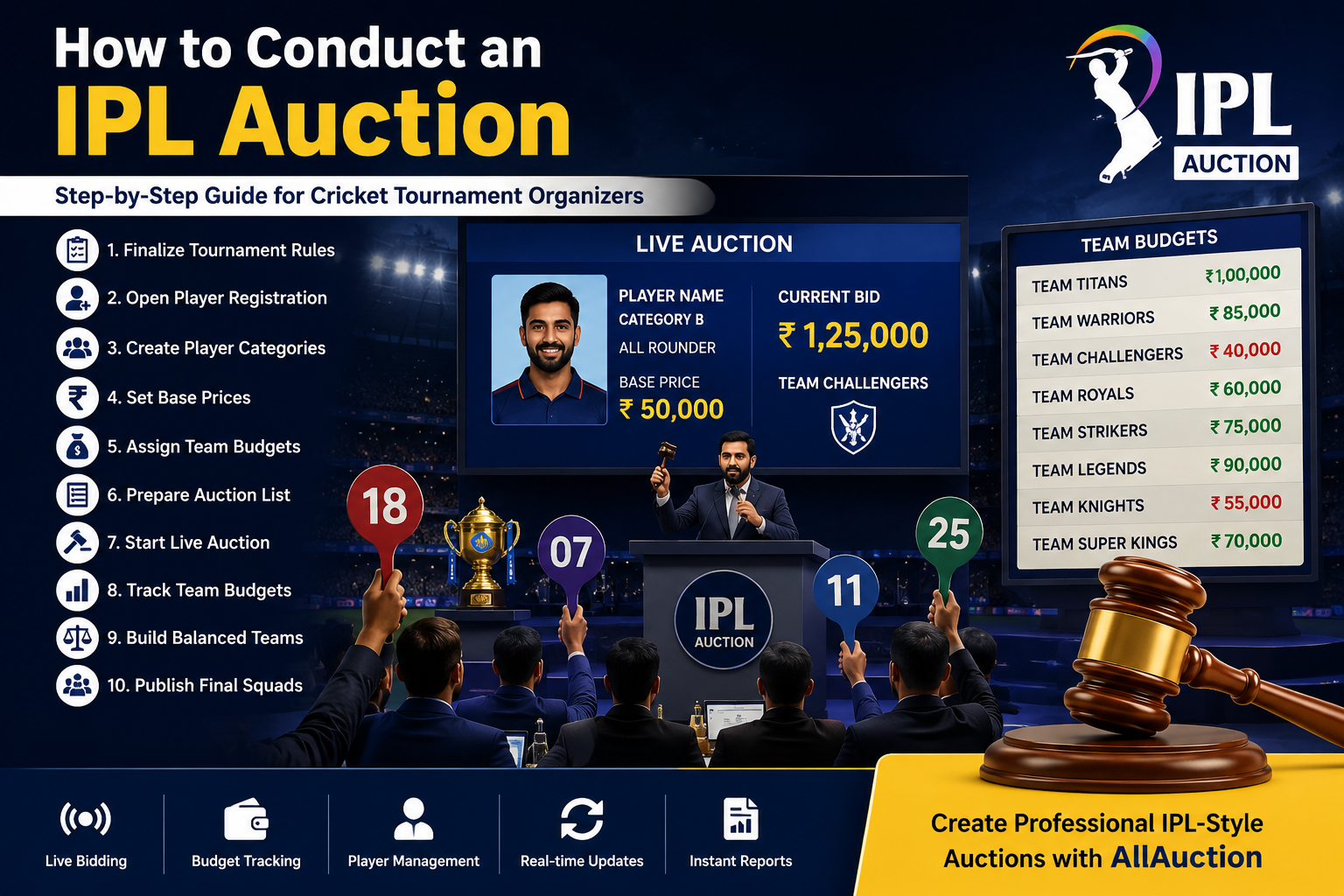
What Is an IPL-Style Auction?
An IPL-style auction is a process where team owners bid for players using a fixed budget. Each player is assigned a base price, and teams compete to purchase the best players while managing their available funds.This auction format creates excitement, transparency, and fair competition among teams.
Step 1: Finalize Tournament Rules
Before conducting the auction, create clear tournament rules.
Important points include:
- Number of teams participating
- Total budget for each team
- Maximum players allowed per team
- Player categories
- Base prices for players
- Auction timing and format
Clear rules help avoid confusion during the auction process.
Step 2: Open Player Registration
The next step is collecting player registrations.
Ask players to provide:
- Full Name
- Mobile Number
- Playing Role
- Batting Style
- Bowling Style
- Previous Tournament Experience
- Recent Performance Statistics
Using online registration forms makes this process easier and more organized.
Step 3: Create Player Categories
To ensure fair bidding, divide players into categories.
Common categories include:
Category A
Experienced and high-performing players.
Category B
Regular tournament players with good records.
Category C
New or developing players.
Category D
Young talent and beginners.
Categorizing players helps team owners make informed decisions during the auction.
Step 4: Set Base Prices
Assign a base price to every player.
Example:
- Category A Players – ₹10,000
- Category B Players – ₹7,000
- Category C Players – ₹5,000
- Category D Players – ₹3,000
The base price should be based on player experience and tournament level.
Step 5: Assign Team Budgets
Every team should receive an equal auction budget.
Example:
If there are 8 teams, each team may receive ₹100,000 as their auction purse.
This creates a level playing field for all participants.
Step 6: Prepare the Auction List
Create a complete player list before the auction begins.
The list should include:
- Player Name
- Category
- Base Price
- Player Statistics
- Playing Role
Sharing this list with team owners in advance allows them to prepare their bidding strategy.
Step 7: Start the Live Auction
On auction day, introduce players one by one.
The auctioneer announces:
- Player Name
- Category
- Base Price
Team owners then place bids.
Example:
Base Price: ₹5,000
Team A: ₹5,000
Team B: ₹6,000
Team C: ₹7,000
Team B: ₹8,000
The highest bidder wins the player.
Step 8: Track Team Budgets
One of the most important parts of an IPL auction is budget management.
After every purchase:
- Deduct the amount from the team's budget
- Update remaining purse balance
- Display live budget information
This prevents overspending and keeps the auction transparent.
Step 9: Build Balanced Teams
Tournament organizers should ensure teams follow squad rules.
For example:
- Minimum 15 Players
- Maximum 20 Players
- At Least 2 Wicketkeepers
- Minimum 4 Bowlers
These rules help maintain competitive balance throughout the tournament.
Step 10: Publish Final Squads
After the auction ends, publish team squads publicly.
Include:
- Team Name
- Player List
- Purchase Price
- Remaining Budget
This creates excitement before the tournament begins.
Why Use Cricket Auction Software?
While manual auctions can work for small events, most organizers now use Cricket Auction Software.
Benefits include:
- Live Bidding System
- Automatic Budget Tracking
- Real-Time Player Allocation
- Instant Reports
- Mobile-Friendly Access
- Professional IPL-Like Experience
Auction software eliminates calculation errors and makes the process much smoother.
Common Mistakes to Avoid
Many organizers make mistakes during their first auction.
Avoid:
- Changing rules during the auction
- Allowing teams to exceed budgets
- Poor player categorization
- Missing player statistics
- Lack of transparency
A well-planned auction creates trust among teams and players.
Final Thoughts
Conducting an IPL-style auction is one of the best ways to make a cricket tournament more professional and engaging. With proper planning, clear rules, and the right auction platform, organizers can create an exciting experience that players and team owners will remember.Whether you are organizing a local cricket league, corporate tournament, school competition, or community event, following these steps will help you conduct a successful IPL auction and build competitive teams for your tournament.
⚡ Organize Your Own Cricket Player Auction
Experience IPL-style live bidding screens, automated AI player cards, and transparent squad management on AllAuction.
Start Free Auction